
Payroll & Workplace Pension Contributions for Leicestershire Businesses
You hire employees, we pay them (and sort the pension too)
Join Leicestershire SME’s saving thousands a year

Payroll and pensions – what we do
We prepare the weekly, monthly and 4 weekly payroll for a number of clients. All of these clients appreciate how important accurate payroll processing is to having happy staff. Whilst these have many differences, the same procedures apply for all. The first thing we do is to check for tax code updates from HMRC. These can occur for a number of reasons, for example second jobs, employees receiving benefits or a range of other reason, but it is really important these are applied accurately and promptly as no employer wants to hear from staff who have paid too much tax!
We then collate the payroll information. This can come across in various ways, but where possible we sent payroll entry requests to allow clients to send the hours, salary and so on direct to us, reducing the risk of errors in inputting. We then check these appear accurate and reasonable before entering into our payroll systems. We then process the payroll and send the necessary submissions to HMRC each payroll run. The payslips and payroll reports are then sent to clients through our payroll portal, allowing them to see any historical payslips, reports and so on as far back as they wish.


Automatic enrolment – what we do
Since 2012 (but since 2018 for the majority of our clients), businesses have been responsible to complying with the new Automatic Enrolment pension regulations. We deal with these obligations each pay run, making the deductions from employees, sending any correspondence that may be required, including compulsory letters giving details of the pension scheme, dealing with opt outs, preparing the schedule of deductions and sending this to the pension provider. We then submit these pension schedules to the pension provider to ensure these payments and deductions are made in accordance with the relevant legislation.
Many businesses forget that this process needs reviewing every 3 years and any employees who have previously opted out must be reassessed and automatically enrolled if......... By carefully managing the payroll and pensions process we ensure this is always carried out correctly and accurately and the final Declaration of Compliance submitted to The Pensions Regulator in the mandatory timescales.
HMRC payments – how we help
Whilst the majority of clients will advise of the PAYE liabilities due, we always aim to go the extra yard to ensure that this is not simply a box ticking exercise, but that everything we can do for our clients is done. When sending the monthly PAYE payments, we always check that the previous months payments have been made and will notify our clients if these have been missed. We also ensure that the Employment Allowance (the amount of Employers NI smaller businesses do not need to pay) is claimed accurately and entered into the accounting software. This step is missed by many accountants and can result in:
- The PAYE liability shown in the accounts giving an inaccurate amount due,
- The profit being understated as the Employment Allowance is not included. This can result in the profit being understated by as much as £10,000 –potentially a significant amount when considering the business performance
READY TO CHAT?
You can contact us via:
Pera Business Park
Nottingham Road
Melton Mowbray
LE13 0PB
HOW DO WE HELP?

We took over the accounts, end of year, payroll and pension auto enrolment for Dignified Hair Design around 3 years ago. Since doing so we have saved them £3000 per year in tax and ensured Dignified staff's wages were sorted on time every time. They moved over from Quickbooks to Xero and haven't looked back.
"Changing over to Adam at Lyfe has been great, we feel we aren't the bottom of someone's pile anymore. Saving us money has been epic and we know Adam has our back as we grow and start to make more of our business." Steve Corbett. Owner.
Save money too

We are here in Leicestershire and beyond:
Whilst the majority of our clients are located within 10 miles of us, we do help clients in a range of locations including:
- Leicester
- Loughborough
- Oakham
- Nottinghamshire
Common mistakes we stop
- Incorrect deduction rates and amounts caused by a variety of reasons such as the wrong NI category being used for apprentices,
- Minimum wage increases not being applied accurately and at the correct time,
- Ensuring compliance with Automatic Enrolment. We helped a business who had not complied correctly and were being pursued for penalties of £15,000 + from The Pensions Regulator
- Ensuring the most tax efficient salary structures for directors and business owners
WHY CHOOSE LYFE ACCOUNTANTS FOR YOUR PAYROLL?
We love seeing business grow and become successful. Since starting in 2007, we have supported many local and national businesses for their accountancy and business needs. Over time, with advances in accountancy software, we have been able to change the emphasis of our work from just completing the statutory accounts and tax returns to building a business which offers holistic business support guiding businesses from preparing regular management accounts to cash flow forecasts and full financial action plans.
By using the latest technology, and keeping a keen eye on the market for new software which will make our clients job easier, we are able to help our clients meet any challenges they come across, our clients are prepared for any taxes and changes in legislation, and we are on hand throughout their business journey, helping clients grow, thrive and achieve their goals, whether financial or non-financial.
We would love to help your business too.
Get the best personal service in Leicestershire
 Pension setup
On time, every time
Contributions
Owner wage
FREQUENTLY ASKED QUESTIONS
What’s the difference between auto-enrolment setup and ongoing pension contributions?
Do I need to run a workplace pension if I only have 1–2 staff?
Yes. There is no minimum number of staff before the duties apply.
If you employ even one person aged between 22 and State Pension age earning more than £10,000 a year, you must put them into a workplace pension and contribute. Staff outside that bracket still have rights: anyone aged 16 to 74 earning above £6,240 can ask to join and you must still contribute for them.
The main exception is a company where the only person on the payroll is a single director without an employment contract. That is a narrow exemption and worth checking properly rather than assuming, which is exactly what we do when we take on your payroll.
What happens each month when pension contributions are taken through payroll?
Every pay run we assess each employee against the current thresholds. This matters more than it sounds, because anyone on variable hours can move in and out of eligibility from one month to the next.
We then calculate the employee deduction and your employer contribution, apply both to the payslip, and submit the contribution schedule to your pension provider so the money is collected by the due date. The minimum total contribution is 8% of qualifying earnings, of which at least 3% has to come from you as the employer.
Anyone who becomes newly eligible is enrolled that month and receives their statutory letter, so nobody slips through.
Can you handle the Declaration of Compliance for us?
Yes, it is part of the service.
Your Declaration of Compliance is due within five months of your duties start date, and it is mandatory even if you had nobody to enrol. The same applies to the re-declaration you must submit every three years after re-enrolment.
Missing it is one of the most common reasons employers get fined, and The Pensions Regulator starts at a £400 fixed penalty before escalating. We diarise the dates from the outset and submit on your behalf, so it never becomes the thing you forgot.
What do you need from me each pay run to run payroll smoothly?
Less than you might expect. We send you a payroll entry request ahead of each run, and you send back hours, overtime, salary changes, bonuses, statutory leave and any starters or leavers.
Using that request rather than a scattering of emails and texts removes most of the input errors before they happen. We check what comes back looks reasonable, query anything that looks odd while it is still fresh, then process the run and put payslips and reports on your portal.
The earlier we have your figures, the more time there is to sort anything unexpected well before pay day.
Can you run weekly and monthly payroll (and deal with overtime/variable hours)?
Yes. We run weekly, fortnightly, four weekly and monthly payrolls, and variable hours are routine for us. Overtime, shift premiums, holiday pay and commission are all handled within the run.
Variable pay does need watching for two reasons. It moves people in and out of pension eligibility between periods, and it can quietly drop someone below the minimum wage without anyone noticing.
From 1 April 2026 the rates are £12.71 an hour for 21 and over, £10.85 for 18 to 20 year olds, and £8.00 for 16 to 17 year olds and apprentices. We check every run against them.
If someone opts out, how do refunds and stopping contributions work?
An employee who has been automatically enrolled gets a one month opt-out window, which starts once they have been enrolled and given their enrolment letter. If they opt out inside that window they are treated as never having joined, and anything already deducted is refunded through payroll.
After a month it is no longer an opt-out but ceasing membership. Contributions stop from the date it is processed, but the money already paid in stays in their pension until they can access it.
Either way the request has to come from the employee to the provider. As the employer you must never encourage anyone to opt out, as inducement is a breach in its own right.
What are “qualifying earnings” and how do they affect contribution calculations?
Qualifying earnings are the slice of pay that contributions are worked out on, rather than the whole salary. For 2026/27 that band runs from £6,240 to £50,270, unchanged from last year.
So an employee on £30,000 has qualifying earnings of £23,760, and the 8% minimum applies to that figure, not the full £30,000. The band includes basic pay, overtime, bonuses, commission and statutory pay.
Some schemes use a different definition and base contributions on full salary instead, which is permitted where the scheme meets the alternative certification tests. We will tell you which basis yours uses and what it means for your costs, because the difference is not small.
Can you manage starters/leavers and pension communications as part of the service?
Yes, all of it. New starters are assessed on their first pay run and enrolled if they qualify. Leavers are processed and their P45 issued.
The statutory pension letters carry their own legal deadline, and they are the single thing busy employers forget most often. We produce and issue them, deal with opt-out and opt-in requests as they come in, and keep the provider updated as people join and leave.
You tell us who has started or left. We take care of the paperwork that has to follow.
Can you support us if we want to keep payroll in-house but need oversight?
Absolutely. Some clients prefer to keep the pay run in-house because it sits naturally with someone in the office, but want a second pair of eyes on it.
We will review the run, check the pension assessment and deductions, sanity check the NI and minimum wage position, and be on the end of the phone for the awkward ones such as maternity pay, sick pay, or setting a director's salary.
You keep the control and the day to day. We cover the risk and the technical bits, and you are never charged for picking up the phone.
We think our payroll/pensions are wrong — can you audit and fix it?
Yes, and it is far more common than people think. There is no judgement here.
We go back through your recent pay runs and pension schedules, establish where things went wrong and what putting it right will cost, then handle the corrections and any disclosure to HMRC or The Pensions Regulator. Where contributions have been missed they normally have to be backdated so the employee ends up where they should have been, and the employer usually has to make good both sides.
We have helped a business facing over £15,000 in penalties from The Pensions Regulator get their position straightened out. Coming forward early is always cheaper than being found.
How quickly can we switch payroll provider without disrupting pay day?
Quickly, and without your staff noticing anything.
The practical constraint is timing. We prefer to switch at the start of a tax month, and ideally at the start of a tax year, so year to date figures carry across cleanly. We will need your last FPS, employee records, tax codes, year to date figures and your pension scheme details from whoever runs it now.
Once we have those, we run a parallel calculation before your first live pay day so everyone can see the numbers match. Pay day itself does not move.
Do you liaise with pension providers (e.g., NEST / The People’s Pension)?
Yes, and we deal with them directly so you do not have to.
That covers uploading the contribution schedule each pay run, chasing anything that has not collected, sorting failed direct debits, and handling opt-outs, opt-ins and address changes.
If you do not have a scheme in place yet, we will help you choose one that works properly alongside your payroll rather than one that creates a manual job for someone every single month. The difference in admin between a well matched scheme and a badly matched one is considerable.
What records do we need to keep for compliance?
For pensions, The Pensions Regulator expects records to be kept for six years, covering who you assessed, what was paid and when, and your scheme details. Opt-out notices are the exception and need keeping for four years.
For PAYE, HMRC expects payroll records to be kept for three years after the end of the tax year they relate to.
In practice, if we run your payroll we hold all of this for you. Payslips and reports sit on your portal and you can pull them going back as far as you need. Nothing to file in a cupboard and nothing to lose in an office move.
What are the risks of getting payroll/pensions wrong or submitting late?
There are three, and they are quite different in character.
HMRC charge automatic penalties for late FPS submissions, starting at £100 a month for schemes of up to nine employees and rising with headcount, plus a further 5% charge if you are more than three months behind.
The Pensions Regulator issues a £400 fixed penalty and can then escalate to between £50 and £10,000 a day depending on your size, with missed contributions having to be backdated on top.
The third risk carries no fine but does the most damage day to day: staff who are paid incorrectly, or paid late, stop trusting you. Almost all of it is avoidable with a process that simply runs on time, every time.
Are workplace pensions different for directors / family employees?
It comes down to their contract, not their surname.
A director without an employment contract is not a worker for automatic enrolment purposes, so a company whose only person on the payroll is a single director generally has no duties at all. Add a second director on a contract of employment, or any other employee, and the duties apply as normal.
Family members are treated exactly like any other employee if they have a contract and meet the age and earnings criteria.
Two things worth flagging. A company whose only employee is a director cannot claim the £10,500 Employment Allowance, and directors' NI is calculated on an annual basis rather than per pay period. Both affect what the most tax efficient salary looks like, which is a conversation worth having every April.
XERO ADVICE FROM ADAM
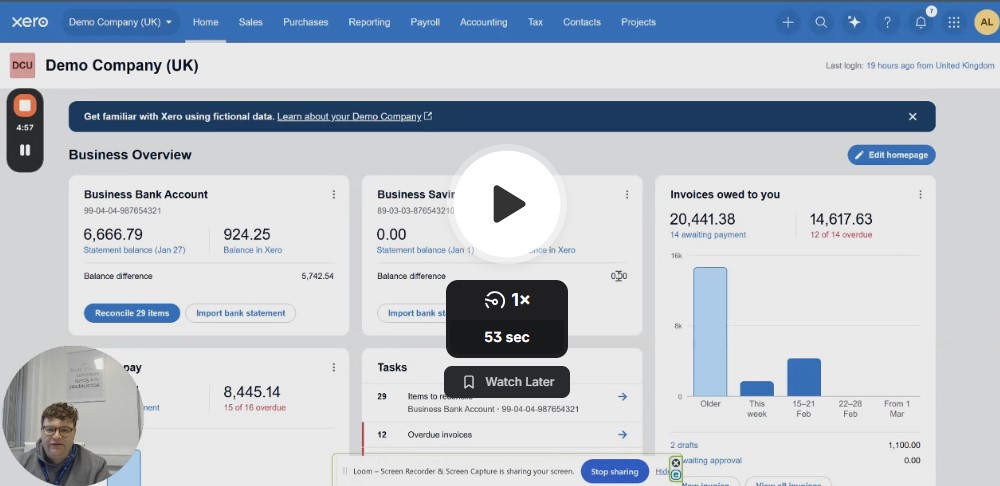
How to handle small under and overpayments in Xero
Adam talks you through how to handle small under and overpayments in Xero To help you along, here is the…
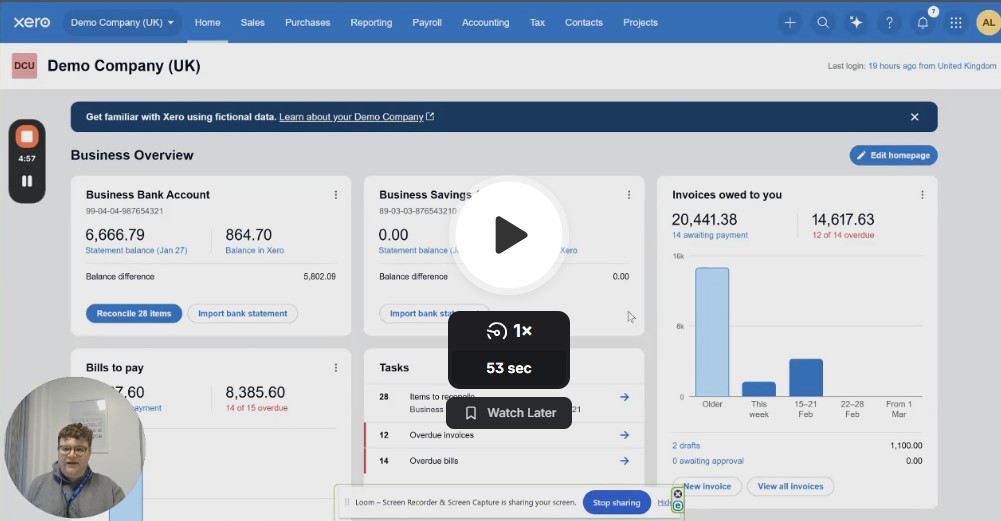
How to add a new bank account in Xero
Adam talks you through how to add a new bank account in Xero To help you along, here is the…
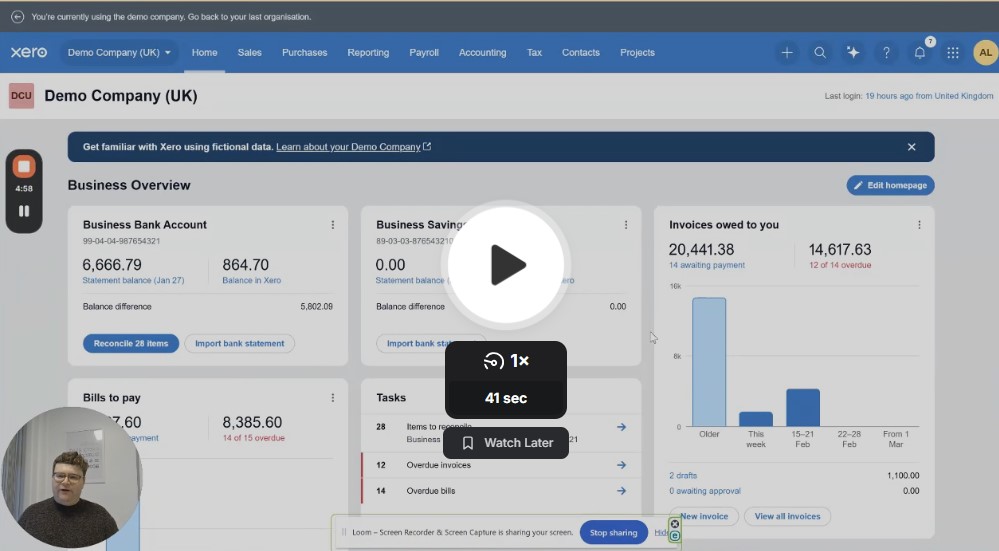
How to match multiple invoices to a payment in Xero
Adam talks you how to match multiple invoices to a payment in Xero 0:00 Hi, this is from Home Lyfe…